


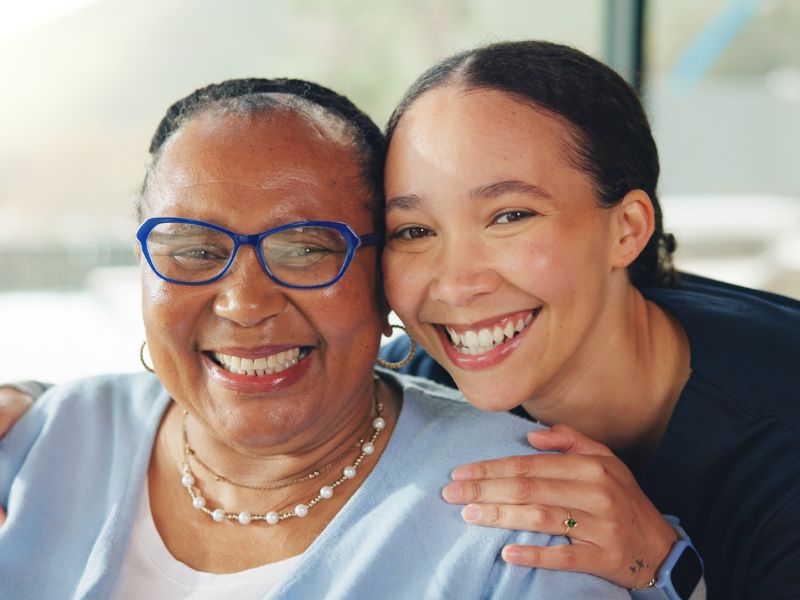
Most memory care programs are built around managing symptoms: containing wandering, minimizing agitation, keeping residents safe. Certified dementia care in Wisconsin means searching for goes a step further, and Castle’s A Smile to Remember program was built specifically around that further step. Rather than asking how do we manage this condition, the program starts from a different question entirely: how do we help this person experience real joy, connection, and dignity, even as their cognitive abilities change?
That distinction shapes everything about how the program actually works.
A Certified Dementia Care Program
A Smile to Remember wasn’t adapted from a generic corporate template. It was developed from the ground up by a Certified Dementia Practitioner on Castle’s staff, someone with specialized training in how dementia actually affects communication, behavior, and emotional experience. That foundation matters because it means the program reflects current, specific clinical understanding of dementia care rather than a one-size-fits-all protocol applied across communities with very different resident needs.
This distinction matters more than it might initially seem. Many senior living communities advertise memory care without dedicated, ongoing dementia-specific training for staff beyond state-required minimums. Castle’s approach goes considerably further, with staff trained well beyond compliance requirements and ongoing education built into how the program operates, not treated as a one-time certification that’s checked off and forgotten.
What Certified Dementia Care in Wisconsin Looks Like Day to Day
The philosophy behind certified dementia care Wisconsin families trust most isn’t abstract. It shows up in specific, observable practices throughout daily life at Castle.
- Safe wandering environments that allow residents freedom of movement within a secure, thoughtfully designed space, rather than restrictive confinement.
- Engagement strategies tailored to each resident’s history, interests, and remaining abilities, not a standardized activity calendar.
- Communication techniques specifically designed to reduce confusion and agitation, including validation therapy and redirection rather than correction or argument.
- Family education and involvement, so loved ones understand how to interact in ways that reduce distress and increase connection during visits.
- Consistent staff assignments, so residents build familiarity and trust with the same caregivers rather than a constantly rotating team.
Why ‘Joy’ Is a Clinical Goal, Not Just a Nice Idea
It might sound sentimental to describe joy as a measurable goal of a care program, but for residents with advanced dementia, moments of genuine connection, recognizing a song, laughing at a familiar joke, enjoying a favorite food, are not incidental. They’re evidence that the person behind the diagnosis is still present and reachable. A Smile to Remember treats those moments as the point of the program, not a bonus. Staff are trained to actively look for and create opportunities for this kind of connection throughout each day, rather than treating engagement as secondary to basic care tasks.
You can learn more about the full program on our Memory Care services page.
How Families Experience the Difference
Families often describe a specific moment when the program’s philosophy becomes real to them: a parent who hadn’t spoken much in weeks suddenly singing along to a familiar song during an activity, or a spouse who’d grown agitated during visits at a previous community staying calm and engaged at Castle because staff understood how to approach the interaction differently. These moments aren’t accidents. They’re the result of deliberate training and a program built specifically to create the conditions where connection becomes possible again.
Family education is also a core part of the program, not an afterthought. Loved ones are taught specific communication techniques, how to approach a conversation, how to respond to confusion without correcting or arguing, how to recognize early signs of agitation, so that visits become more rewarding rather than something families dread or feel unprepared for.
Why New Berlin and Wisconsin Families About This Program by Name
Families touring multiple communities often tell us they hadn’t heard memory care described this way before visiting Castle. Many had assumed all memory care essentially functioned the same way, focused primarily on safety and supervision. Seeing a program explicitly built around relationship and joy, backed by a specific clinical credential rather than a marketing phrase, tends to be the moment families recognize the difference between adequate memory care and the kind of care they actually want for someone they love.
Certified dementia care in Wisconsin should do more than manage a diagnosis, and A Smile to Remember was built to prove that’s possible.
Visit Castle Senior Living’s Contact Us page to schedule a tour, or learn more on our homepage.